

Carbon credits have developed as a market-based mechanism to encourage companies and governments to reduce and remove greenhouse gas (GHG) emissions. In recent years, as more corporations commit to net-zero and carbon neutrality targets, demand for carbon credits has been steadily increasing.
At the same time, there is growing scrutiny over whether carbon credits deliver real and measurable emission reductions. Three core concepts, additionality, permanence, and leakage, are widely recognized as fundamental criteria for assessing the credibility of carbon credits.
They serve as essential benchmarks for evaluating the quality, rather than the quantity, of carbon credits and are widely incorporated into international policy frameworks and certification standards.
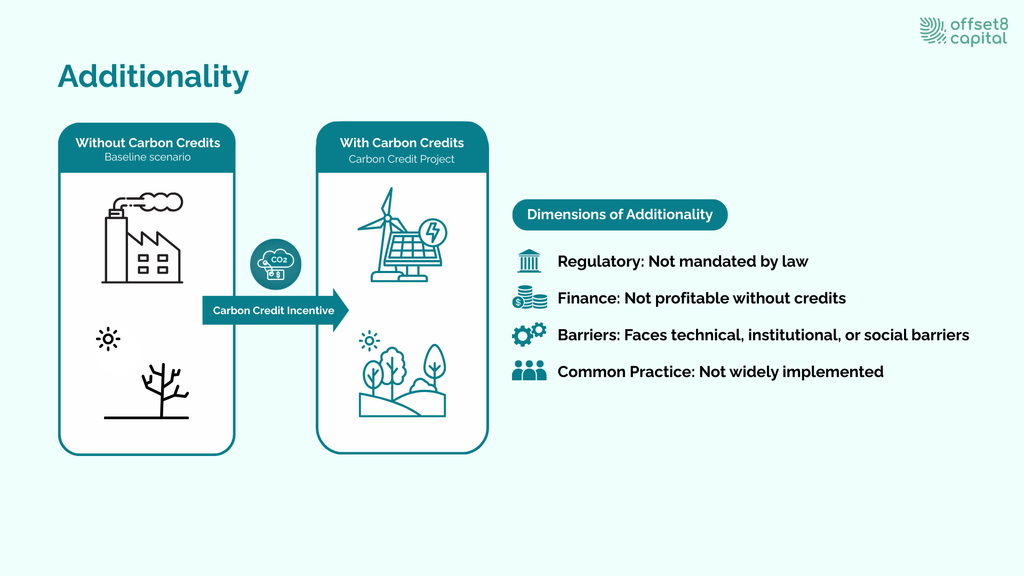
Fig1: Conceptual framework of additionality and its multidimensional assessment
Additionality refers to the concept used to determine whether emission reductions or carbon removals would have occurred in the absence of the carbon credit mechanism.
In other words, additionality addresses the question of whether a project would genuinely have been implemented without the economic incentive provided by carbon credits.
The environmental value of carbon credits depends critically on whether additionality is satisfied. If credits are issued to projects that are already sufficiently profitable and would have been implemented regardless of credit revenues, then the resulting emission reductions would have occurred anyway. From a global perspective, such projects do not generate “additional” mitigation outcomes.
For this reason, additionality is not merely one of several quality attributes of carbon credits; it is a fundamental prerequisite that determines whether credits can be issued in the first place. Projects that fail to demonstrate additionality are, in principle, ineligible for carbon credit issuance.
Under the Clean Development Mechanism (CDM), additionality is assessed through a stepwise process consisting of four key components:
1. Identification of baseline alternatives (Regulatory additionality): Identify realistic and legally compliant alternative scenarios that could be implemented instead of the proposed project, and confirm that the project is not mandated by regulations.
2. Investment analysis (Financial additionality): Demonstrate that, without credit revenues, the proposed project is economically less attractive than alternative options or fails to meet standard investment benchmarks.
3. Barrier analysis (Non-financial additionality): Show that technical, institutional, market, or social barriers would prevent the project from being implemented in the absence of carbon credit incentives.
4. Common practice analysis (Diffusion check): Demonstrate that similar activities are not widely implemented in the relevant sector or region, or that the proposed project is fundamentally different from existing practices, thereby validating the additionality claim.
Only when these conditions are satisfied can emission reductions or removals be considered to have occurred because of the carbon credit mechanism.
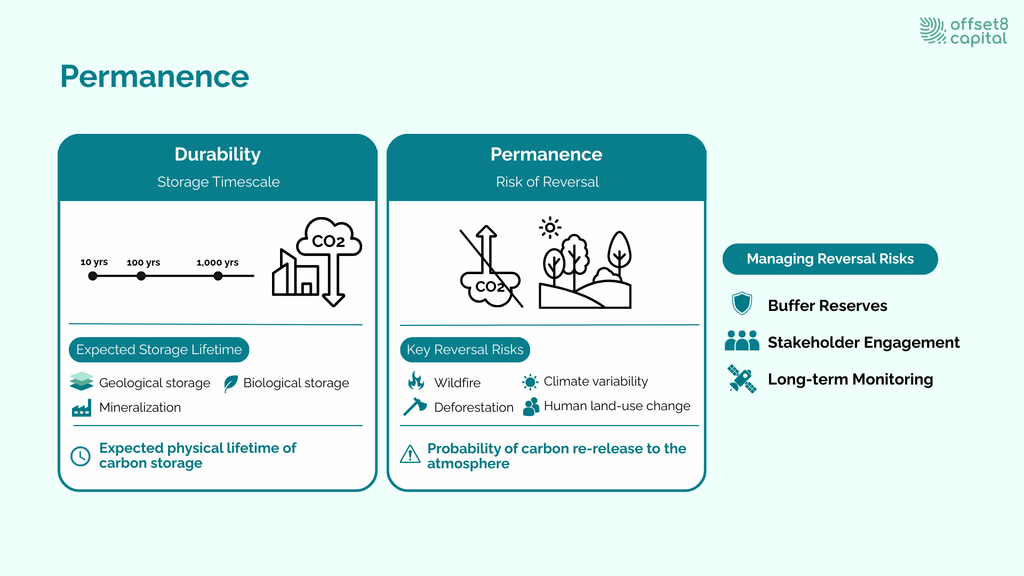
Fig2: Conceptual framework of permanence distinguishing storage durability and reversal risk
Permanence refers to the likelihood that emission reductions or carbon removals achieved by a project will be maintained over the long term without being reversed in the future.
Carbon credits are not designed to reward temporary mitigation outcomes; rather, they are intended to represent climate benefits that remain meaningful over extended time horizons.
For example, the forest methodology “VM0045 Improved Forest Management Using Dynamic Matched Baselines from National Forest Inventories, v1.2” developed under Verra requires project proponents to demonstrate, at the time of project initiation, a commitment to maintain reduced harvesting levels for more than 100 years. Depending on the project type, a 100-year time horizon has become a widely used de facto benchmark for permanence in carbon crediting frameworks.
Permanence is often confused with durability, but the two concepts are distinct.
According to the National Academies, durability refers to the expected physical or chemical lifetime of carbon storage, how long carbon is designed to remain sequestered from the atmosphere. Permanence, by contrast, refers to the risk that stored carbon may be released in the future, incorporating uncertainty and the probability of reversals.
Carbon removal pathways differ significantly in their exposure to reversal risk and their expected storage timescales.
In technology-based approaches, carbon is typically isolated in forms intended to remain stable over very long periods, which reduces the probability that stored CO₂ will re-enter the atmosphere. By contrast, projects relying on biological or land-based systems are inherently exposed to environmental and socio-economic uncertainties. Natural disturbances, climatic variability, and human activities can undermine carbon storage and lead to the release of previously sequestered carbon.
For this reason, governance frameworks for land-based carbon projects place particular emphasis on mechanisms to address non-permanence risks, such as buffer reserves, long-term monitoring requirements, and risk-sharing arrangements. In these contexts, managing the likelihood and consequences of reversals is often more critical than the nominal design lifetime of carbon storage itself.
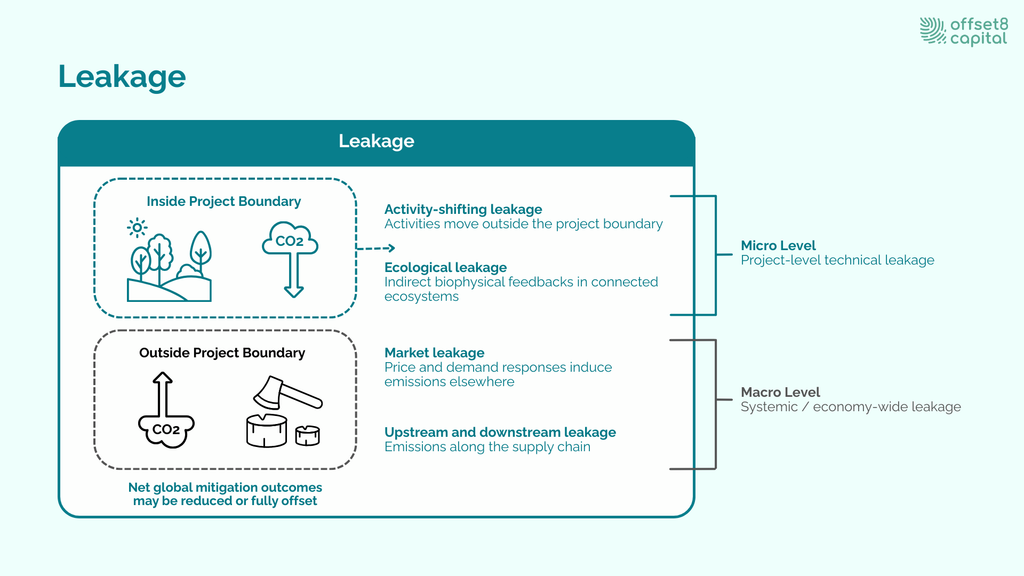
Fig3: Conceptual framework of leakage in carbon crediting across spatial and typological dimensions
Leakage refers to the phenomenon whereby emission reductions achieved within a carbon credit project lead to increased emissions outside the project boundary as activities or impacts are displaced to other locations.
Although a project may appear to successfully reduce emissions within its defined boundary, a broader geographic or economic perspective may reveal that some or all of these reductions are offset by increases elsewhere.
For example, even if a REDD+ project successfully reduces deforestation in a specific area, logging or agricultural activities may shift beyond the project boundary, causing new deforestation in other regions. In such cases, the net global mitigation impact is significantly undermined.
It is important to distinguish leakage in carbon crediting from the concept of “carbon leakage” discussed in policy contexts such as emissions trading systems, where industrial relocation across jurisdictions is the primary concern. In carbon crediting, leakage refers to a project-level technical and operational issue: whether a project unintentionally displaces emissions to other locations.
Leakage in carbon crediting is commonly classified into four main categories:
1. Activity-shifting leakage: This occurs when emission-generating activities are relocated to areas outside the project boundary as a result of the mitigation intervention. A typical example is when afforestation or conservation projects restrict land use, leading agricultural activities to move to other regions where emissions then occur.
2. Ecological leakage: This refers to indirect effects on emissions in connected ecosystems or hydrological systems. For instance, mitigation activities that alter water levels may increase CO₂ emissions from soils in hydrologically connected wetlands.
3. Market leakage: This occurs when mitigation activities affect the supply or demand of emission-intensive goods or services, leading to emission increases elsewhere. For example, reduced timber harvesting in a project area may trigger increased logging in other regions to meet market demand.
4. Upstream and downstream leakage: This refers to emissions that occur along the supply chain associated with the mitigation activity. Examples include emissions from the production of fuels, feedstocks, or materials used in the project, such as methane emissions associated with natural gas production.
If leakage is not properly identified, minimized, and conservatively quantified and deducted, there is a risk of overstating the actual mitigation impact of a project. Therefore, comprehensive assessment and management of leakage are essential components of high-integrity carbon credits.
Additionality, permanence, and leakage examine carbon credits from different perspectives, but they share a common purpose: to assess whether a credit genuinely delivers meaningful climate mitigation outcomes.
Carbon credits represent an intangible commodity, tonnes of CO₂ equivalent (tCO₂e) claimed to have been reduced or removed. Their credibility depends entirely on a chain of measurement methodologies, assumptions, baseline scenarios, and risk management frameworks. These three principles constitute the minimum foundational pillars underpinning that credibility architecture.
These three concepts can be framed as the following core questions:
If any one of these conditions is not satisfied, the claimed tCO₂e and the actual net global mitigation outcome diverge. In other words, these three criteria are non-substitutable: failure to meet any single one undermines the environmental integrity of the carbon credit.
It is crucial to recognize that additionality, permanence, and leakage are not optional “quality enhancements.” Rather, they are minimum conditions that determine whether carbon credits can be considered valid climate mitigation instruments in the first place. Only when all three criteria are satisfied can a credit credibly claim that a given tonne of CO₂e has truly been reduced or removed.

The use of satellite imagery has recently attracted increasing attention as a method for evaluating and monitoring additionality, permanence, and leakage in carbon credit projects. A key advantage of satellite data is its ability to observe large areas under consistent conditions over long time horizons. The IPCC (2019) also emphasizes the importance of spatially explicit and time-series-based monitoring of land-use change, noting that aggregated national or regional statistics cannot adequately capture spatial heterogeneity such as plot-level forest degradation, natural regeneration, or changes in biomass stocks. As a result, spatially and temporally consistent observational data are considered essential for assessing long-term carbon stock dynamics.
In the assessment of additionality, satellite data contribute to the objective reconstruction of pre-project baselines. For instance, in forest restoration projects, time-series analyses of historical land cover, vegetation recovery trends, and logging histories allow structural verification of whether forests would have regenerated in the absence of carbon credit incentives, or whether land that was already forested has been misclassified as degraded. In the context of permanence and leakage, satellite data also play a crucial role by enabling continuous tracking of forest cover and land-use change, which allows early detection of potential carbon stock reversals due to disturbances such as wildfires or forest degradation, as well as spatial identification of activity displacement beyond project boundaries.
Although ground-based surveys and field monitoring remain indispensable, integrating satellite data with AI-based analytics enables the development of MRV systems with spatial coverage, temporal continuity, and independent verification capacity, thereby significantly enhancing the credibility and transparency of carbon credit generation. Satellite data and AI are thus transforming theoretical integrity concepts—additionality, permanence, and leakage—into continuously verifiable governance infrastructures, signaling a shift in carbon credit integrity assessment from static methodological compliance toward dynamic validation across space and time.
Disclaimer
*Disclaimer: This commentary is for informational purposes only and should not be considered financial, investment, or regulatory advice. No assurances or guarantees are made regarding its accuracy or completeness. Views expressed are our own and subject to change
Additionality asks whether the emission reduction or removal would have occurred in the absence of carbon credit incentives. Permanence asks whether the mitigation outcome will be maintained over time. Leakage asks whether emissions have simply been displaced to another location. These three concepts are core criteria used to assess the quality of carbon credits, rather than their quantity.
Carbon credits represent an intangible commodity, measured in tCO2e, that are claimed to have been reduced or removed. If any of additionality, permanence, or leakage are not satisfied, the claimed mitigation outcome will not correspond to the actual net global emission reduction. Therefore, these three elements are widely regarded as minimum conditions for ensuring the environmental integrity of carbon credits.
Leakage is commonly classified into four main categories:

