
Even today, a large number of people around the world continue to rely on indoor cooking using firewood or charcoal. While these traditional cooking practices have long been part of daily life, they are also associated with serious challenges, including adverse health impacts, environmental degradation, and social inequalities.
Against this backdrop of interconnected issues, improved cookstoves have gained international attention as a practical and immediately deployable solution. This article explains what cookstoves are, how the technology works, and why cookstove initiatives are increasingly linked to climate action and carbon credit mechanisms.
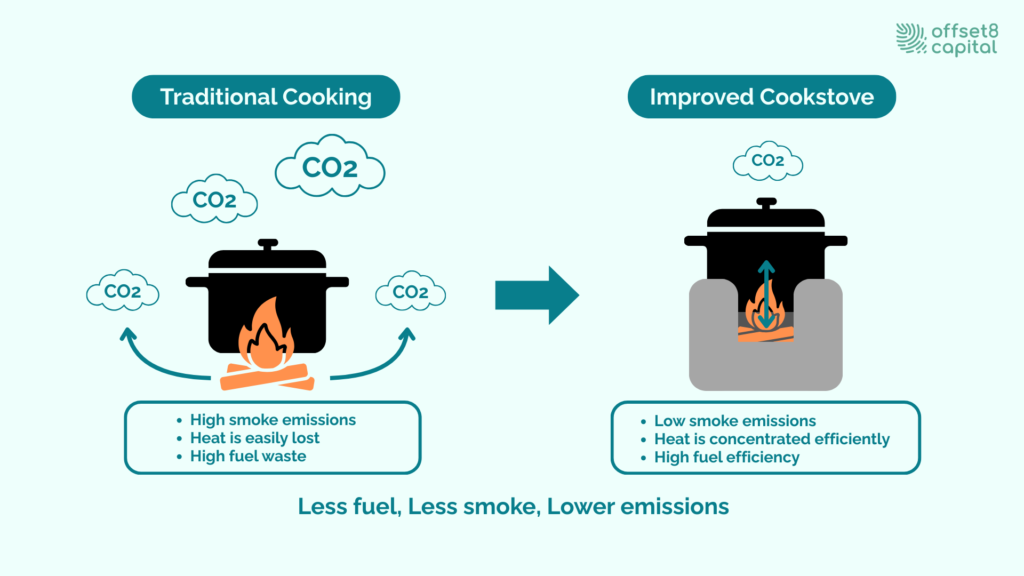
Fig1: Traditional Cooking vs. Improved Cookstoves
An improved cookstove refers to a broad category of cooking devices designed to use fuel more efficiently, reduce smoke emissions, and lessen the physical and time burden associated with cooking, compared with traditional open-fire methods such as three-stone stoves. The degree of “improvement” varies widely depending on the baseline cooking practice, design objectives, and price range, resulting in diverse stove types across different countries and regions.
In the early stages of dissemination, many low-cost models were introduced to ensure affordability for even the poorest households. However, the simplicity of these designs often led to challenges related to durability and quality. Today, building on these lessons, there is growing support for improved cookstoves that offer higher performance, greater durability, and better alignment with local cooking habits. It is estimated that around 166 million improved cookstoves are currently in use worldwide, although adoption rates vary significantly by region.
Past dissemination programs also revealed that a lack of technical standards and inconsistent quality resulted in many stoves being abandoned after a short period of use. As a result, current efforts increasingly emphasize not only distribution, but also long-term usability through appropriate design, quality control, and after-sales support mechanisms.
According to the World health organization, In developing countries, approximately 2.1 billion people, representing around a quarter of the global population, still rely on open fires or inefficient stoves for cooking. These stoves are commonly fueled by biomass such as firewood, charcoal, animal dung, and agricultural residues, as well as coal or kerosene. Because these cooking practices have low combustion efficiency, they generate large amounts of smoke and lead to severe household (indoor) air pollution (IAP).
Long-term exposure to household air pollution is known to increase the risk of non-communicable diseases, including stroke, ischaemic heart disease, chronic obstructive pulmonary disease (COPD), and lung cancer. According to estimates by the World Health Organization (WHO), household air pollution was responsible for approximately 2.9 million premature deaths worldwide in 2021. This figure includes more than 309,000 deaths among children under the age of five. In the same year, exposure to household air pollution resulted in an estimated loss of around 95 million disability-adjusted life years (DALYs). Women and children, who are most often responsible for cooking and fuel collection, bear a disproportionate share of these health impacts, highlighting the issue as both a public health and a social challenge.
Addressing these interconnected health and social challenges requires viewing the dissemination of improved cookstoves as more than a simple energy intervention. Improved cookstoves should instead be positioned as a cross-cutting solution that contributes simultaneously to health improvement, gender equality, environmental protection, and climate change mitigation. Achieving sustainable and scalable adoption depends on strengthening quality control and performance evaluation of cookstove technologies, while also reducing economic barriers through climate finance and carbon finance mechanisms. Such approaches can deliver multiple co-benefits, including reduced labor burdens for women and children, lower household fuel costs, and broader social and environmental gains.
The core objective of improved cookstoves is to increase the efficiency of the combustion process in order to reduce fuel consumption and limit the generation of harmful emissions. A large share of the energy used in cooking depends on how efficiently fuel is burned. In traditional three-stone fires, however, the mixing of fuel and air and the transfer of heat are not optimized, resulting in significant energy losses and high levels of smoke.
The three-stone fire is historically the simplest and most widely used cooking system. The first biomass cookstoves were introduced in the 1940s with the development of the chulha, followed by the introduction of mud-based cookstoves designed to accommodate multiple pots for rural households. During the 1970s, growing concerns over energy shortages and environmental degradation led to a rapid increase in interest in cookstove improvement. During this period, Winiarski developed the rocket stove, which significantly improved thermal efficiency.
In 1985, Reed developed the top-lit up-draft (TLUD) stove. The TLUD stove is ignited from the top, similar to lighting a match, and the upward airflow generated by the flame supplies primary air to the lower part of the combustion chamber and secondary air within the flame zone. This design has been shown to produce fewer harmful emissions than traditional stoves or even rocket stoves. Studies comparing TLUD stoves with three-stone fires have found that harmful emissions can be reduced to approximately one-eighth of those from traditional open fires. This reduction is achieved through a gasification process, in which combustible gases generated from solid fuel are burned in a separate stage. In addition, TLUD stoves can produce charcoal, which can be reused as a cooking fuel or applied to soils as biochar for soil improvement.
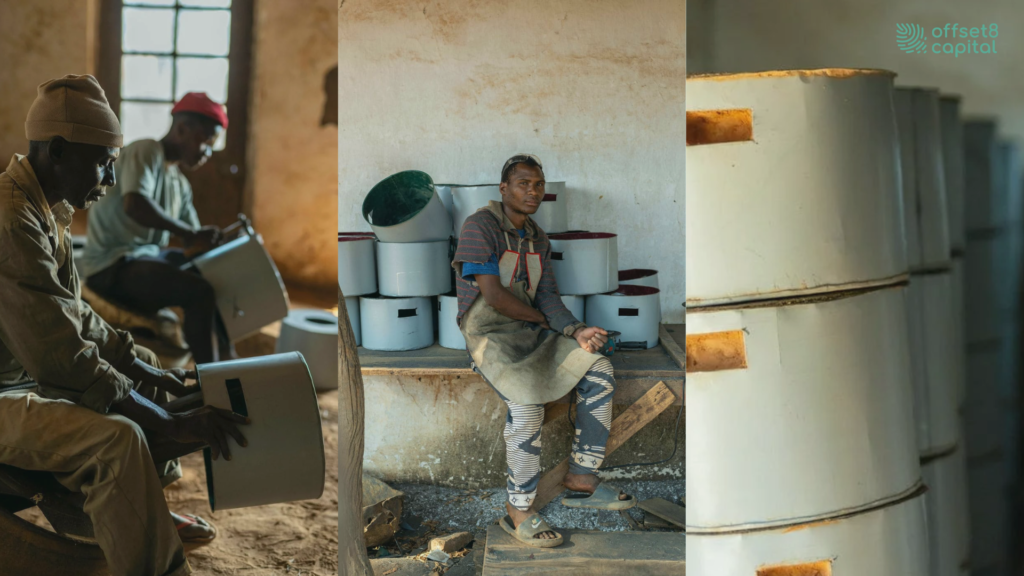
Modern improved cookstoves intentionally incorporate design features such as optimized combustion chambers, controlled air inlets, and enhanced heat transfer efficiency. For example, enclosed combustion chambers and well-regulated airflow promote more complete combustion of fuel. In recent high-performance models, the use of metal components and refractory materials has further optimized combustion temperatures and heat transfer. These design advances reduce combustion losses and ensure that heat is delivered more efficiently to the cooking surface.
From a technical perspective, international frameworks have been established to objectively assess the performance of cookstoves. The International Organization for Standardization (ISO) has developed international standards that evaluate cookstoves in a stepwise manner based on criteria such as combustion efficiency, emissions, and safety. These standards make it possible to compare how clean and safe different stoves are, including those described as “improved” cookstoves.
In traditional cooking practices, fuel tends to burn at relatively low temperatures and often undergoes incomplete combustion, causing smoke to accumulate indoors. Improved cookstoves, by contrast, are designed with optimized combustion chambers and controlled airflow, enabling more stable and efficient combustion. As a result, they significantly reduce the amount of smoke and harmful pollutants emitted during cooking. Another reason this technology has gained international attention is that cookstoves can be deployed in areas where access to electricity or gas infrastructure is limited, offering a practical solution for cleaner cooking in energy-constrained settings.
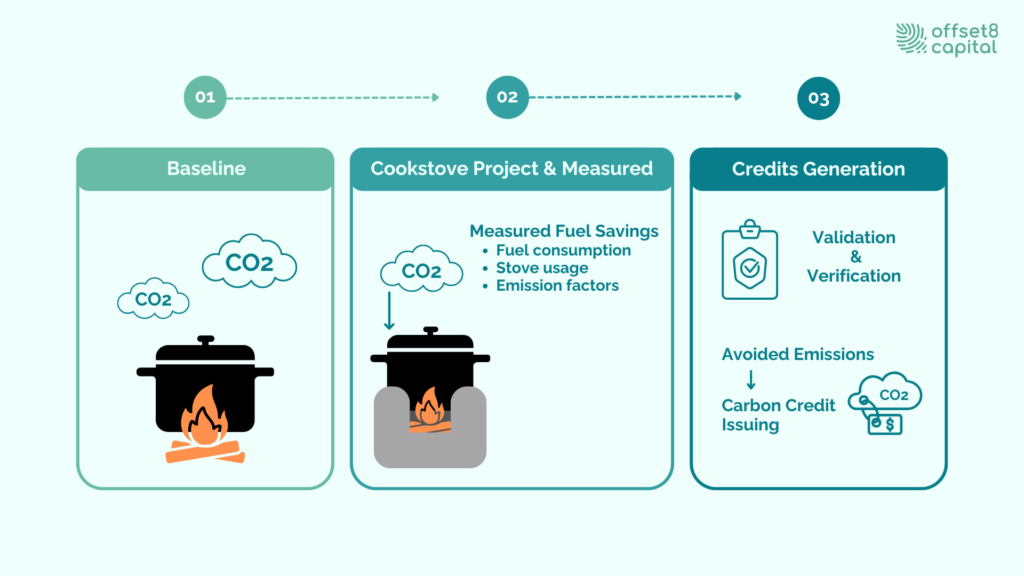
Fig2: How Cookstove Projects Generate Carbon Credits
Cookstove projects qualify for carbon credits because they can demonstrate, in accordance with approved methodologies, that fuel consumption and greenhouse gas emissions are avoided or reduced compared with traditional cooking practices. In these projects, pre-intervention cooking behaviors and fuel use are defined as the baseline. Fuel consumption after the introduction of improved cookstoves is then quantified using either direct measurements or estimates based on efficiency indicators. The difference between the baseline and post-project fuel use is calculated as the emission reduction, and only reductions that meet applicable standards and verification requirements are issued as carbon credits.
From a carbon market perspective, cookstove projects are classified as avoidance projects. They generally fall into two main categories. The first is the fuel efficiency approach, which reduces overall fuel consumption by introducing more efficient cookstoves for the same cooking activities. The second is the fuel switch approach, which replaces carbon-intensive fuels such as firewood or charcoal with lower-carbon energy sources such as electricity or liquefied petroleum gas (LPG). In both cases, emission reductions are quantified based on the emissions that would have occurred under traditional cooking practices but are avoided as a result of the project.
All cookstove carbon methodologies are fundamentally built on three core components. The first component is fuel savings, calculated as the difference between fuel consumption under the baseline scenario (traditional stoves) and fuel consumption after project implementation. Fuel savings may be determined through direct household measurements, such as Kitchen Performance Tests (KPT), or estimated using efficiency ratios of the improved stoves, depending on the methodology and project context.
The second component is the number of stoves in use. Importantly, this is not based on the number of stoves distributed or installed, but on the number of households or stoves that are actually used. Effective usage is calculated by multiplying the number of participating households by the number of monitoring days and adjusting this figure using the measured uptake rate, which reflects how consistently the improved stoves are used in practice.
The third component is carbon intensity. This includes fuel-specific emission factors, the amount of energy obtained from fuel combustion, and, in the case of biomass fuels, the fraction of non-renewable biomass (fNRB). By combining these parameters, fuel savings can be translated into quantified greenhouse gas emission reductions.
In this way, cookstove carbon credits do not arise automatically from the deployment of technology alone. Instead, they are generated through a structured framework that demonstrates emission reductions based on fuel savings, actual usage, and carbon intensity. As a result, the credibility of cookstove carbon credits depends on robust measurement methods, accurate monitoring of real-world use, and alignment with international standards. For this reason, cookstove projects are closely linked to established methodologies and certification frameworks such as ISO standards, Gold Standard, and Verra.

Companies and investors are increasingly paying attention to cookstove projects because they allow both emission reduction impacts and social benefits to be demonstrated in a clear, measurable, and verifiable manner. In recent years, disclosure frameworks such as TCFD, ISSB, and CSRD have shifted expectations away from simply expressing commitment toward climate action, and toward providing evidence-based explanations of emission reductions, including calculation methods and underlying assumptions.
A key feature of cookstove projects is that their benefits extend beyond emission reductions and are often visible at the household level. These benefits include improved health outcomes through reduced household air pollution, lower time and labor burdens for women through reduced fuel collection and cooking time, and positive spillover effects on education and employment opportunities. As a result, cookstoves are increasingly viewed not merely as an offsetting tool, but as impact-oriented interventions that align well with broader corporate sustainability strategies.
Within the context of the SDGs and ESG frameworks, cookstove projects also offer a clear and structured way to demonstrate contributions across multiple goals. In addition to climate action (SDG 13), a single cookstove project can simultaneously contribute to good health and well-being (SDG 3), gender equality (SDG 5), and access to affordable and clean energy (SDG 7). This ability to present environmental and social value as a coherent and integrated narrative represents a significant advantage when engaging investors and other stakeholders.
Against this backdrop, high-quality cookstove projects are increasingly being positioned not simply as emission reduction instruments, but as integral components of companies’ medium- to long-term climate strategies and impact investment portfolios. In particular, projects that demonstrate robust and transparent methodologies, accurately capture real-world usage, and align with third-party verification standards tend to command higher levels of trust among companies and investors.
Disclaimer
This commentary is for informational purposes only and should not be considered financial, investment, or regulatory advice. Offset8 Capital Limited is regulated by the ADGM FSRA (FSP No. 220178). No assurances or guarantees are made regarding its accuracy or completeness. Views expressed are our own and subject to change
Traditional indoor cooking using firewood or charcoal is widely recognized as a structural challenge that simultaneously causes health impacts, environmental degradation, and gender inequality. According to the World Health Organization (WHO), household air pollution contributes to several million premature deaths each year. Improved cookstoves have therefore gained international attention as a practical solution that can address these challenges in a relatively low-cost and immediately deployable manner.
Cookstove projects are eligible for carbon credits because they can demonstrate real reductions in fuel consumption and greenhouse gas emissions compared with traditional cooking practices. These reductions are quantified and verified using approved methodologies and MRV (Monitoring, Reporting, and Verification) systems. The emission reductions that are confirmed through this process can then be certified and issued as carbon credits.
Emission reductions from cookstove projects are calculated by combining three key components: fuel savings, the number of stoves actually in use, and the carbon intensity of the fuel, including factors such as emission coefficients and the fraction of non-renewable biomass (fNRB). A defining feature of cookstove methodologies is that they focus on real-world usage rather than simply counting the number of stoves distributed.

