
In recent years, the global carbon credit market has been transforming. It has evolved from a space primarily associated with voluntary corporate environmental contributions into a market that is increasingly aligned with national climate policies and international rules. Within this shift, Corresponding Adjustment (CA) has emerged as a central concept that can affect the value of carbon credits and determine whether they can be used for specific purposes.
A sound understanding of CA is particularly important in the context of Article 6 of the Paris Agreement, Internationally Transferred Mitigation Outcomes (ITMOs), and aviation-related frameworks such as CORSIA. This article explains what Corresponding Adjustment is, why it is needed, and what it means for companies in practice, drawing on both institutional design and market implementation.
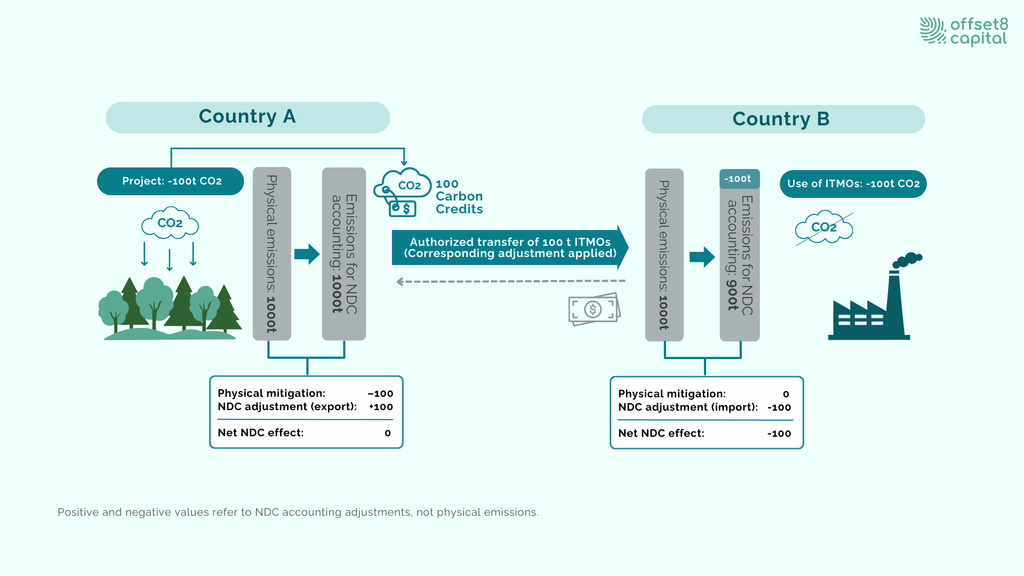
Fig1: How Corresponding Adjustment Works in Practice
Corresponding Adjustment (CA) refers to an NDC accounting adjustment applied to internationally transferred emission reductions or mitigation outcomes in order to prevent the same mitigation outcome from being counted simultaneously by more than one country.
It is an essential institutional requirement for ensuring environmental integrity within the international cooperation framework established under Article 6 of the Paris Agreement.
Carbon credits and mitigation outcomes are often generated through emission reduction or removal activities implemented within the territory of a specific country. If these outcomes are transferred internationally and used by another government or by entities in another country, the absence of a corresponding accounting adjustment could allow both the country where the mitigation occurred and the country or party that acquired and used the mitigation outcome to claim the same reduction as their own achievement. This situation constitutes double counting, a longstanding concern in international carbon markets.
CA addresses this problem by requiring that, when mitigation outcomes are transferred internationally, the transferring country applies an NDC accounting adjustment that reflects the transferred amount. As a result, the transferred mitigation outcome can be counted toward the acquiring country’s NDC achievement, while globally the reduction is counted only once in a consistent manner.
As clearly explained in the UNFCCC Article 6.2 Reference Manual, CA does not directly modify a country’s national greenhouse gas inventory, which records actual emissions. Instead, CA is positioned as an accounting adjustment applied for the purpose of assessing progress toward NDC implementation and achievement. This distinction is an important premise for properly understanding the system.
The increasing emphasis on CA reflects the fundamental institutional design of the Paris Agreement regarding how emission reductions are achieved and accounted for. Under the Paris Agreement, each country sets its own emissions reduction target, known as its Nationally Determined Contribution (NDC). Global emissions reductions are achieved through the aggregation and reporting of national progress. Within this structure, the consistency of NDC accounting is a core determinant of whether international emissions reductions are real and effective.
If CA did not exist, the same emission reduction could potentially be used simultaneously toward multiple countries’ NDC achievement. In such a case, even if accounting records suggested that targets were being met, global emissions might not actually be decreasing sufficiently. This mismatch would undermine the credibility of international cooperation on mitigation.
To prevent this risk, the application of CA is treated as an institutional precondition in cooperative approaches under Article 6 when mitigation outcomes are transferred internationally. CA plays a role in correcting accounting distortions that can arise when national mitigation efforts are connected across borders. In doing so, it helps maintain the integrity of the entire NDC-based mitigation architecture.
In this sense, CA is not merely a technical or auxiliary accounting rule. It can be understood as an institutional foundation required for international carbon markets to function under the Paris Agreement and for international mitigation to operate as a credible system that delivers real outcomes.
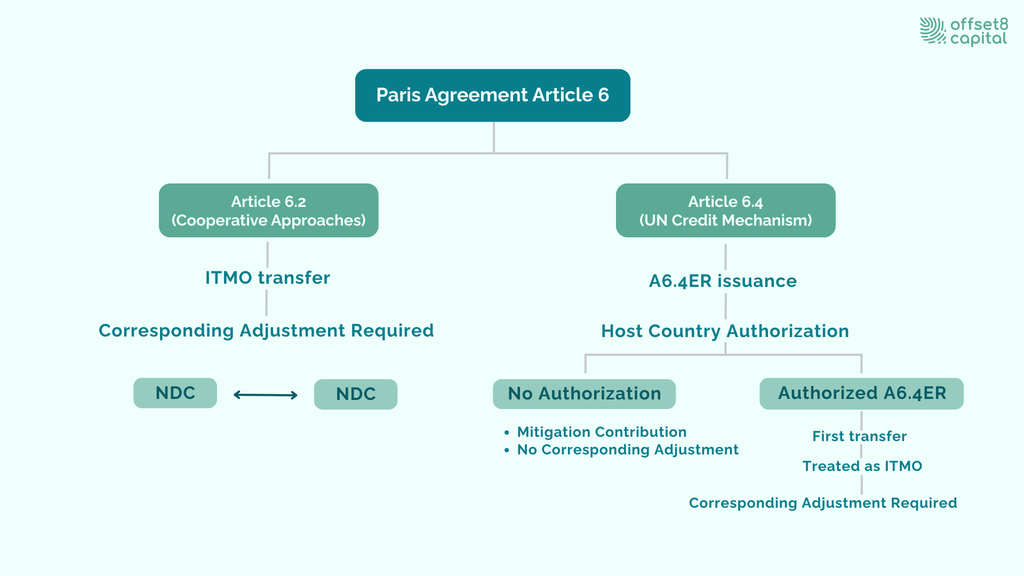
Fig2: How Corresponding Adjustment Applies under Article 6 of the Paris Agreement
Corresponding Adjustment is positioned under Article 6 of the Paris Agreement as an institutional requirement for ensuring accounting consistency when mitigation outcomes are transferred and used across borders. Article 6 establishes international mechanisms through which countries can cooperate to advance mitigation, including the transfer and use of mitigation outcomes internationally.
Article 6.2 recognizes that countries may use cooperative approaches, either bilaterally or multilaterally, to transfer and use Internationally Transferred Mitigation Outcomes (ITMOs). Under this framework, mitigation outcomes may be transferred from one country to another and used toward the acquiring country’s NDC achievement. Because this creates a risk that the same mitigation could be claimed more than once, cooperative approaches under Article 6.2 treat the application of CA, which ensures corresponding accounting between the transferring and acquiring countries, as a key institutional requirement.
By contrast, Article 6.4 establishes a crediting mechanism operating under UN supervision. It provides a framework for issuing standardized credits known as A6.4ERs, based on internationally defined procedures.
A6.4ERs are distinguished in the registry by identifiers, and their institutional treatment differs depending on whether the host country has authorized their use. A6.4ERs that the host country has not authorized are treated as Mitigation Contribution A6.4ERs. These represent mitigation that contributes to the host country’s NDC, and at that stage there is no commitment to undertake a corresponding adjustment. In contrast, Authorized A6.4ERs, which the host country has formally authorized for use toward NDC achievement and or other international mitigation purposes, are subject to corresponding adjustment requirements. Furthermore, once an authorized A6.4ER is first transferred, it is treated as an ITMO under Article 6.2.
Accordingly, under Article 6.4, the issuance of a credit does not automatically mean that corresponding adjustment is applied. Instead, host country authorization and the intended use of the credit function as the key determinants of whether CA requirements apply.
While Corresponding Adjustment is a concept that runs across Article 6 as a whole, its application differs depending on institutional design, particularly between the cooperative approach framework of Article 6.2 and the crediting mechanism of Article 6.4. Where mitigation outcomes are used toward national targets or compliance-oriented international purposes, CA becomes a critical requirement for maintaining NDC accounting integrity.
ITMOs (Internationally Transferred Mitigation Outcomes) refer to mitigation outcomes that are transferred internationally and are a key term used to describe transfers under cooperative approaches pursuant to Article 6.2. ITMOs arise when one Party transfers mitigation outcomes and another Party acquires them for use toward its own NDC achievement.
For ITMOs to operate as internationally consistent mitigation outcomes, Corresponding Adjustment is indispensable. CA prevents double counting and ensures global accounting integrity. In practice, when a mitigation outcome is transferred, the host country reflects the transfer through an adjustment in its NDC accounting, while the acquiring country reflects the acquisition in its own NDC accounting. Maintaining this corresponding relationship prevents the same mitigation from being counted simultaneously by multiple Parties and enables ITMOs to function as internationally consistent outcomes.
This relationship is clearly articulated in the UNFCCC Article 6.2 Reference Manual, which explains that transfers of ITMOs under cooperative approaches and the implementation of CA are core requirements for maintaining NDC accounting integrity. The Manual also reiterates that CA does not modify the national GHG inventory itself, but is applied as an adjustment in NDC accounting.
CA therefore serves as a key institutional condition that allows ITMOs to function not merely as tradable numbers, but as mitigation outcomes that are recognized and accounted for consistently at the international level.

CORSIA (the Carbon Offsetting and Reduction Scheme for International Aviation) is an international aviation offsetting scheme operated by ICAO. It requires airlines to use eligible emissions units to offset a portion of emissions growth. While CORSIA is not designed primarily as a mechanism for achieving national NDC targets, it is structured with the intention of maintaining alignment with the Paris Agreement.
For this reason, avoiding situations in which the same mitigation outcome is claimed both by the host country toward its NDC and by airlines for CORSIA purposes, known as double claiming, is treated as an important requirement. In ICAO’s CORSIA Eligible Emissions Units (October 2025) document, eligibility conditions for emissions units explicitly include host country authorization and confirmation related to the avoidance of double claiming.
Within that document, corresponding adjustment is referenced in terms of whether it has already been applied and verified. Specifically, for units linked to emissions reductions occurring from 1 January 2021 onward, units may be treated differently where the host country has not authorized their use for CORSIA through an attestation to the avoidance of double claiming. The same applies where authorization exists but the programme has not verified, in accordance with its procedures, that the corresponding adjustment has already been applied.
Because CORSIA is not a framework that credits mitigation outcomes toward the acquiring country’s NDC achievement in the same way as Article 6.2 ITMOs, it is not designed as a system in which corresponding adjustment is uniformly and automatically required in all cases. However, from the perspective of alignment with the Paris Agreement, particularly with respect to avoiding double claiming, whether corresponding adjustment has been applied or whether equivalent measures ensure that the mitigation outcome is not simultaneously claimed toward the host country’s NDC becomes an important factor in determining the institutional status of eligible units.
In this sense, corresponding adjustment under CORSIA is best understood not as an always-mandatory attribute, but as a key institutional reference point used to confirm how mitigation outcomes relate to national NDC accounting and to exclude double claiming.
Disclaimer
*Disclaimer: This commentary is for informational purposes only and should not be considered financial, investment, or regulatory advice. No assurances or guarantees are made regarding its accuracy or completeness. Views expressed are our own and subject to change
CA is an institutional precondition for internationally transferred mitigation outcomes that are used toward another country’s NDC achievement. This is particularly the case where mitigation outcomes are treated as ITMOs under cooperative approaches pursuant to Article 6.2.
Not necessarily. In the voluntary carbon market, where companies use credits for voluntary offsetting purposes, CA is often not treated as mandatory at present. However, as voluntary markets become more closely connected to regulatory systems and national targets, expectations for alignment with CA may increase.
CA is not merely a technical accounting rule. It is a precondition for international carbon markets to function credibly and to deliver real emissions reductions. As Article 6 market mechanisms expand, CA is increasingly positioned as a form of trust infrastructure for international carbon markets.

