
The Middle East (GCC) region continues to raise the ambition of its Nationally Determined Contributions (NDCs) as it pursues economic diversification away from dependence on hydrocarbon exports. The United Arab Emirates (UAE) was the first country in the MENA region to commit to Net Zero by 2050, Saudi Arabia has set a large-scale emissions reduction target under its Vision 2030 and Circular Carbon Economy framework, and Oman has set a new long-term Net Zero 2050 goal alongside a fresh absolute-emissions reduction target through 2035. This article compares the UAE, Saudi Arabia, and Oman across five dimensions: Climate Targets, priority sectors for emissions reduction, Carbon Pricing mechanisms, carbon credit opportunities, and recent policy developments.
GCC countries share an economic structure heavily reliant on hydrocarbon exports, while pursuing economic diversification and climate action under long-term national strategies. Saudi Arabia's Vision 2030 and Oman's Vision 2040 are each explicitly positioned within their respective NDCs as the framework linking economic diversification with emissions reduction. The UAE has advanced its climate strategy through the Net Zero by 2050 Strategic Initiative announced in 2021 and subsequent measures. All three countries place strong emphasis domestically on renewable energy, carbon capture, utilisation and storage (CCUS), and green/blue hydrogen technologies.
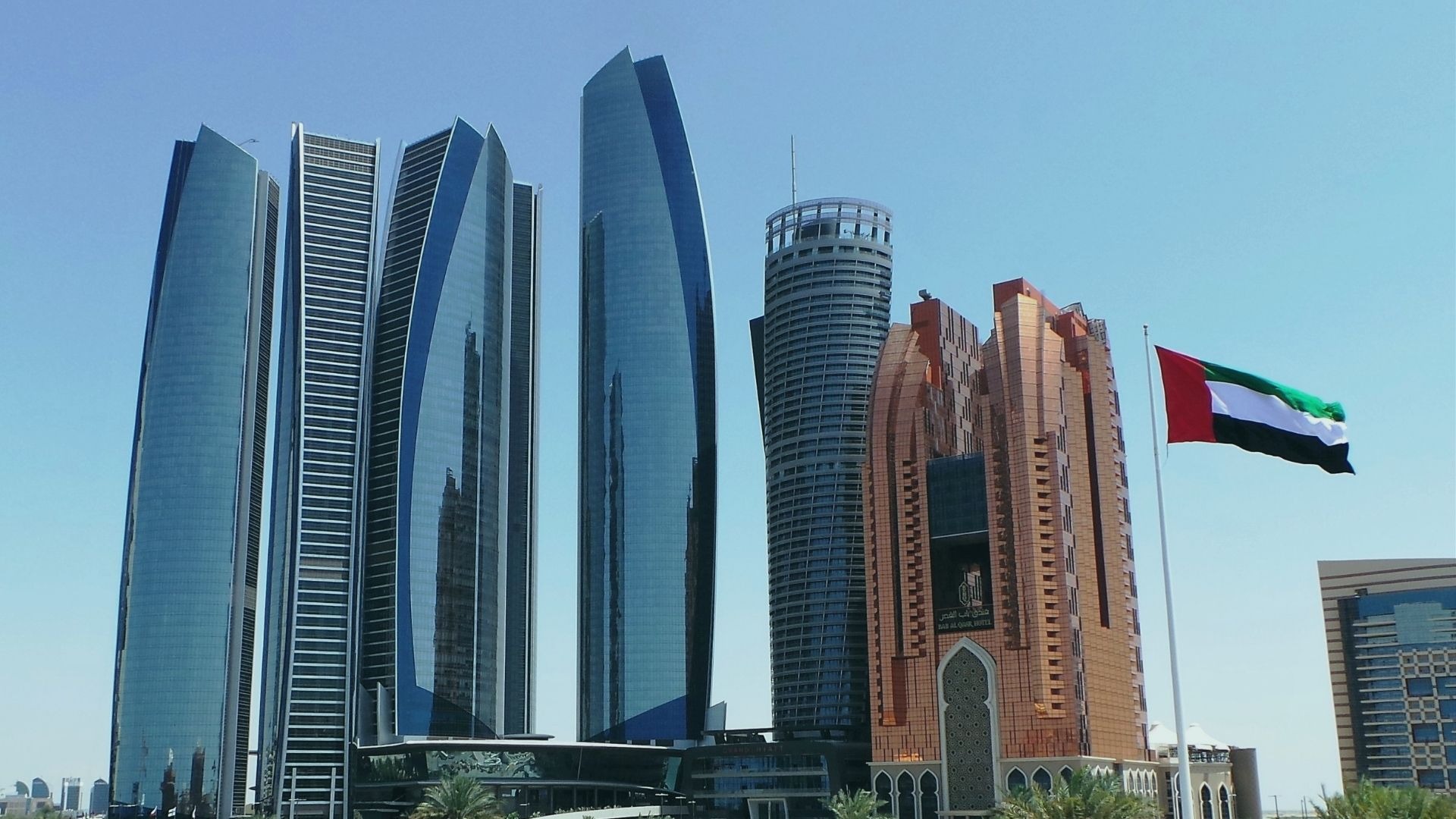
The UAE submitted its Third NDC (NDC 3.0) to the UNFCCC in November 2024. Using 2019 as the base year, it targets a 47% reduction in GHG emissions by 2035 (base-year emissions of 196.3 million tonnes CO2eq, versus a 2035 target of 103.5 million tonnes CO2eq). A notable feature is that this is set as a single national target, without a conditional/unconditional split. Its long-term goal is Net Zero by 2050, and in 2021 the UAE became the first country in the MENA region to commit to net zero. The UAE also submitted its Long-Term Strategy (LTS) to the UNFCCC in January 2024.
The sectoral breakdown (2019 actuals → 2035 target, reduction rate) is as follows.
| Sector | 2019 (MtCO2eq) | 2035 Target (MtCO2eq) | Reduction |
| Industry | 92.6 | 68.0 | 27% |
| Transport | 30.2 | 24.2 | 20% |
| Waste | 4.8 | 3.0 | 37% |
| Buildings | 71.0 | 15.0 | 79% |
| Agriculture | 4.2 | 2.6 | 39% |
The UAE has not introduced a mandatory carbon pricing instrument such as a carbon tax or an Emissions Trading System (ETS). However, in June 2024 the Cabinet issued Resolution No. 67 of 2024, establishing the National Register for Carbon Credits (NRCC), a domestic carbon-credit registration and trading scheme, which entered into force on 28 December of the same year. Entities emitting 0.5 million tonnes CO2eq or more annually (Scope 1 & 2), measured against a 2019 baseline, are required to conduct MRV (measurement, reporting and verification) and register with the NRCC; entities below this threshold may register and participate in credit trading voluntarily. In terms of design, this is not a mandatory pricing instrument like a carbon tax or ETS, but rather falls into the category of a government-run crediting mechanism.
The UAE also signed a Memorandum of Cooperation on the Joint Crediting Mechanism (JCM) with Japan on 16 April 2023, becoming the 26th JCM partner country.
In the UAE, projects have been developed across a broad range of sectors, including transport (e.g. electrification through EV adoption), energy demand (e.g. street-lighting efficiency retrofits), waste-to-energy generation and district cooling, industrial emissions (e.g. direct air capture technology trials), and AFOLU (afforestation and carbon sinks in desert areas). Project activity is particularly concentrated in waste-derived energy conversion and afforestation/carbon-sink projects.

Saudi Arabia submitted its Updated First NDC in 2021, setting a target of reducing, avoiding and removing 278 million tonnes CO2eq per year by 2030, using 2019 as the base year. In 2025, it submitted its Second NDC, raising this ambition to reducing, avoiding and removing 335 million tonnes CO2eq per year by 2040 (target period 2030–2040), under a "dynamic baseline" in which the emissions baseline itself varies depending on future economic conditions. This target is expressed through both GHG metrics and non-GHG metrics, the latter including expanded renewable energy capacity and land restoration/afforestation covering approximately 4 million hectares. Over the long term, the Kingdom is pursuing reductions compatible with economic diversification funded by hydrocarbon export revenues (Vision 2030); notable features include that the target is self-financed and not contingent on international financial support, and that the Kingdom currently reserves its participation in cooperative approaches under Article 6 of the Paris Agreement.
The Kingdom has placed the Circular Carbon Economy (the "4R" model of Reduce, Reuse, Recycle and Remove) at the core of its policy framework, prioritising the following areas.
Saudi Arabia introduced the Greenhouse Gas Crediting and Offsetting Mechanism (GCOM) in 2023. Rather than a mandatory pricing instrument such as a carbon tax or ETS, GCOM is a government-run crediting and offsetting mechanism through which domestic entities can voluntarily issue and trade credits or certificates generated by emissions reduction or removal projects; it has no relation to other mandatory carbon pricing instruments ("Not applicable"). In 2025, GCOM began accrediting Validation/Verification Bodies (VVBs); as of 22 December 2025, several VVBs had been accredited.
Saudi Arabia signed a JCM Memorandum of Cooperation with Japan on 13 May 2015, becoming the 13th JCM partner country.
In Saudi Arabia, project activity has centred on AFOLU (blue carbon such as mangrove afforestation), waste management (e.g. recycling and refuse-derived fuel), and renewable energy (e.g. large-scale solar power). Alongside the launch of the domestic GCOM crediting scheme, project supply is expected to expand going forward.

In its Third NDC (NDC 3.0), Oman set a target of an absolute emissions reduction of up to 33% by 2035 — 7% unconditional and an additional 26% conditional on international support — against a 2024 base year (total emissions of 93.6 million tonnes CO2eq). A key feature of this update is the shift in calculation methodology from a target relative to Business-As-Usual (BAU) to an absolute-reduction target. Its long-term goal is Net Zero by 2050.
2024 sectoral emissions were 79.6 million tonnes for Energy, 10.5 million tonnes for IPPU (industrial processes), 1.8 million tonnes for AFOLU, and 1.7 million tonnes for Waste, with the energy sector accounting for over 85% of total emissions. The following are prioritised as strategic decarbonisation levers.
The conditional portion of the reduction target depends on the deployment of technologies such as hydrogen and CCUS, making international financial and technical cooperation a key factor going forward.
Oman has not introduced a mandatory carbon pricing instrument such as a carbon tax or ETS. However, the Oman Net Zero Centre (ONZC), under the Ministry of Energy and Minerals, operates "Meezan", a domestic digital platform for greenhouse gas emissions accounting and management, providing MRV (measurement, reporting and verification) functions aligned with IPCC methodologies and the ISO 14064 series. Meezan is planned to expand its connectivity with domestic carbon credit markets going forward.
Oman also signed a JCM Memorandum of Cooperation with Japan on 9 April 2026, becoming the 32nd JCM partner country.
In Oman, project activity is concentrated in areas tied to fossil fuel infrastructure, including landfill gas recovery, recovery and utilisation of associated gas from oilfields (flaring reduction), solar power, and blue carbon (coastal ecosystem conservation such as mangrove restoration).
| Comparison | UAE | Saudi Arabia | Oman |
| NDC target year / Net Zero year | 2035 (Net Zero 2050) | 2040 (Net Zero year not yet specified) | 2035 (Net Zero 2050) |
| Reduction target | 47% reduction (vs. 2019) | 335 Mt CO2eq/year reduced, avoided & removed (2040, dynamic baseline, 2019 base year) | Up to 33% reduction (vs. 2024; 7% unconditional + 26% conditional) |
| Key priority sectors | Industry, buildings, power & water | Energy efficiency, renewables, hydrogen, CCUS | Energy (renewables, flare recovery), IPPU (CCUS) |
| Carbon pricing mechanism | NRCC (carbon credit registry, since Dec 2024) | GCOM (crediting and offsetting mechanism, since 2023) | Meezan (MRV platform operational; carbon market functionality planned) |
| Main carbon credit project types | Waste-derived energy, EV/energy efficiency, afforestation | Waste recycling | Landfill gas recovery, associated gas recovery |
Source: UNFCC | NDC Registry, Joint Crediting Mechanism (JCM)
All three GCC countries have raised their climate ambition in ways that integrate economic diversification with climate goals, though the nature of their progress differs. The UAE has set a target of a 47% reduction versus 2019 by 2035, and made NDC compliance a legal obligation through Federal Decree-Law No. 11 of 2024. Saudi Arabia has set a self-financed target of 335 million tonnes CO2eq per year by 2040, while currently reserving its participation in international cooperation under Article 6 of the Paris Agreement. Oman has shifted its calculation methodology from a BAU-relative to an absolute-reduction basis, and centres its approach on reductions tied to fossil fuel infrastructure, such as associated gas recovery and landfill gas recovery.
None of the three countries has introduced a carbon tax or ETS, but all have in recent years launched government-run credit schemes — GCOM in Saudi Arabia, NRCC in the UAE, and Meezan in Oman. These differ in maturity, however: only GCOM is currently facilitating actual credit trading, while the other two schemes remain at an earlier stage of development. All three countries are also JCM partner countries with Japan, though the UAE and Oman have no registered projects to date.
For investors, opportunities in the near term are likely to centre on the voluntary carbon credit market rather than compliance markets. Key points to monitor going forward include the next round of NDC updates, the operational progress of each country's domestic credit scheme, and the emergence (or otherwise) of registered JCM projects.
Disclaimer
*Disclaimer: This commentary is for informational purposes only and should not be considered financial, investment, or regulatory advice. No assurances or guarantees are made regarding its accuracy or completeness. Views expressed are our own and subject to change
No. None of the three countries has introduced a mandatory carbon pricing instrument such as a carbon tax or ETS. Instead, all three have launched government-run carbon credit schemes: NRCC in the UAE (since December 2024), GCOM in Saudi Arabia (since 2023), and Meezan in Oman (MRV operational, carbon-market functionality planned).
All three are government-run carbon credit mechanisms rather than compliance pricing instruments, but they differ in maturity. GCOM (Saudi Arabia) is the most advanced, with Validation/Verification Body (VVB) accreditation underway since 2025. NRCC (UAE) is a mandatory registration and MRV scheme for large emitters, in force since December 2024. Meezan (Oman) is currently focused on emissions accounting and MRV, with carbon-market trading functionality planned for a later phase.
Yes. All three are partner countries in Japan's Joint Crediting Mechanism (JCM): Saudi Arabia since May 2015 (13th partner country), the UAE since April 2023 (26th), and Oman since April 2026 (32nd). As of 2026, neither the UAE nor Oman has any JCM-registered projects yet.

