
Nationally Determined Contributions (NDCs) are a key concept in global climate policy and sustainability discussions. Established under the Paris Agreement, NDCs outline each country’s plans for reducing greenhouse gas emissions and adapting to climate change, serving as the backbone of international decarbonization efforts.
However, many readers encounter NDCs as a technical term without a clear explanation of how they work in practice. Questions such as What exactly are NDCs? Are they legally binding? How do they affect domestic carbon markets and carbon credits? are increasingly common.
In this article, we explain the fundamentals of NDCs in a clear and structured way. We cover their legal and policy background, their role in shaping domestic climate policies, and their connection to carbon markets and future mitigation strategies.
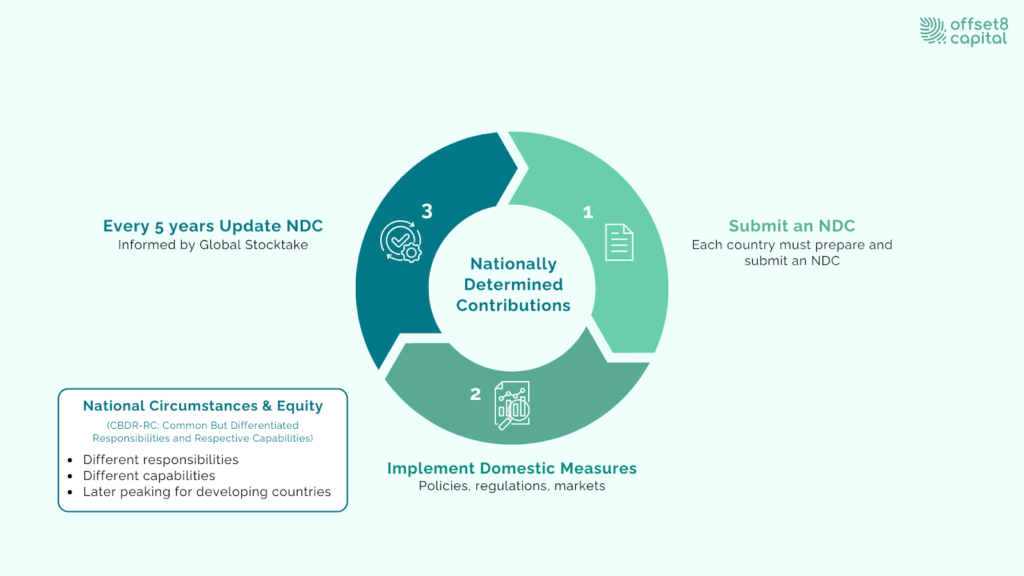
Fig1: How NDCs Work: The Ambition Cycle under the Paris Agreement
Nationally Determined Contributions (NDCs) are the concrete commitments through which each country specifies its efforts to reduce greenhouse gas emissions and adapt to the impacts of climate change. NDCs serve as a core mechanism under the Paris Agreement, signaling the direction of national mitigation and adaptation policies at the international level and driving global climate action forward.
Under Article 4 of the Paris Agreement (mitigation), each Party is required to prepare, communicate, and maintain successive NDCs. Parties are also required to pursue domestic mitigation measures with the aim of achieving the objectives of their NDCs. Accordingly, the NDC framework is designed as an obligation of conduct rather than an obligation of result, meaning that countries are legally required to make efforts toward their stated targets rather than being legally bound to achieve specific outcomes.
Furthermore, the Paris Agreement is designed so that NDCs are not fixed targets, but are instead subject to an ambition cycle in which commitments are progressively strengthened over time. Each Party’s NDC is required to represent a progression beyond the previous NDC and to reflect its highest possible ambition. Parties are also required to submit updated NDCs every five years, taking into account the outcomes of the Global Stocktake, which assesses collective progress toward the Agreement’s long-term goals. This iterative strengthening mechanism is commonly referred to as the ratchet mechanism and constitutes a core design principle of international climate governance.
In addition, the Paris Agreement is grounded in the principles of equity and common but differentiated responsibilities and respective capabilities (CBDR-RC), recognizing national circumstances. It explicitly acknowledges that developing countries may experience a later peaking of emissions, reflecting the political and economic reality of balancing development and climate action. Consequently, NDCs are not merely environmental targets but function as strategic national policy documents integrated with broader development strategies.

The rationale for NDCs stems from the fact that climate action is deeply intertwined with areas that fall under national sovereignty, such as energy policy, industrial policy, and fiscal systems, making it unrealistic for an international body to impose uniform emission reduction obligations on all countries.
Climate policy is closely linked to core national policy domains, including energy, industry, agriculture, and taxation, and it is politically and institutionally difficult for an international organization to unilaterally mandate that countries “reduce emissions by X percent.” Against this backdrop, the Paris Agreement adopted NDCs as a bottom-up mechanism, allowing each country to set its own climate targets in accordance with its national circumstances.
The NDC framework was also designed in response to the limitations of the Kyoto Protocol. Under the Kyoto Protocol, legally binding emission reduction obligations applied primarily to developed countries, while some countries did not participate and major emerging economies had no binding commitments. As a result, the Protocol was insufficient to drive global emission reductions at the necessary scale. The Paris Agreement therefore shifted toward a framework that emphasizes universal participation, moving away from internationally imposed obligations toward an approach that aggregates nationally determined commitments.
Furthermore, countries differ significantly in their levels of economic development, technological capacity, and energy structures. For developing countries in particular, economic growth and poverty reduction remain critical policy priorities, and strict emission reduction obligations could constrain development prospects. Accordingly, the Paris Agreement incorporates the principle of equity, recognizing differentiated national circumstances and allowing countries to adopt country-specific mitigation targets and measures, rather than imposing a uniform global target structure.

The numerical targets contained in NDCs themselves are not legally binding under international law. However, Parties are subject to legally binding obligations regarding the process of submitting, reporting, and updating NDCs. This two-layer structure of legal bindingness is a defining feature of the NDC framework under the Paris Agreement.
The Paris Agreement does not impose mandatory emission reduction levels (e.g., “a country must reduce emissions by X percent”). Instead, it adopts a bottom-up architecture in which each country sets its own mitigation targets based on its economic conditions, technological capacity, and policy environment, and submits them to the international community. Consequently, failure to achieve an NDC target does not trigger international fines or sanctions.
Nevertheless, the NDC system is not merely voluntary. Parties are subject to legal obligations in several key areas:
In other words, the Paris Agreement legally binds countries to participate in the process and ensure transparency, rather than to achieve specific mitigation outcomes. This process-based legal obligation is a core institutional innovation of the Paris Agreement.
This design reflects lessons learned from the Kyoto Protocol, where top-down binding emission reduction obligations proved politically unsustainable. Strict mandatory targets risked non-participation or withdrawal by major emitting countries. To ensure universal participation, the Paris Agreement shifted toward a framework that relies on transparency, peer pressure, and international review mechanisms to encourage climate action.
The Relationship Between NDCs and Domestic Markets
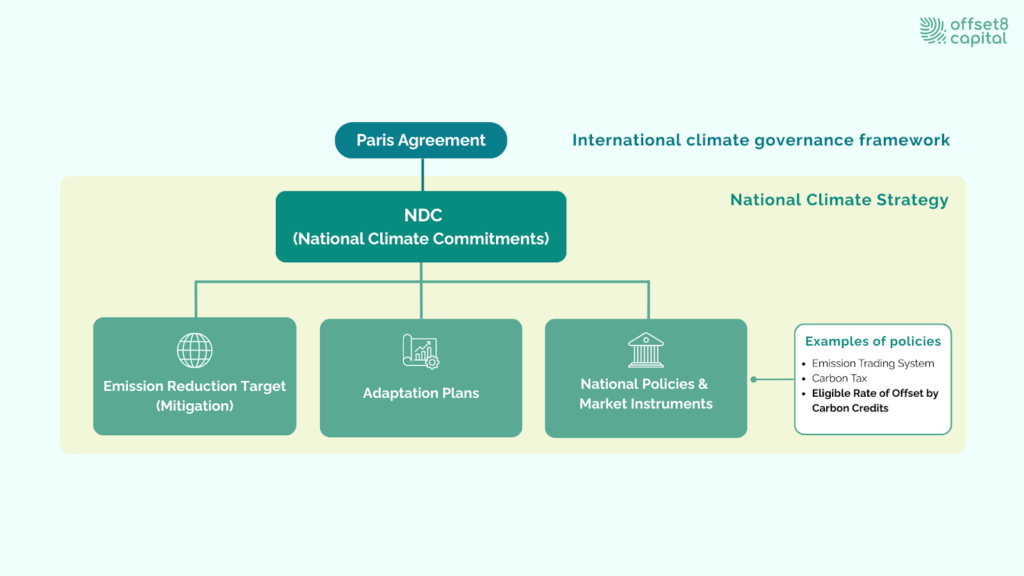
Fig2: How NDCs Shape Domestic Climate Policy and Markets
NDCs function not only as international emission reduction commitments but also as macro-level policy signals that shape the direction of domestic policies and market institutions. To achieve the mitigation targets set out in their NDCs, governments develop domestic legal frameworks, regulations, fiscal instruments, and standards. Accordingly, NDCs are not merely diplomatic documents but also blueprints for the design of domestic market systems.
In many countries, the following policy instruments are introduced to achieve NDC targets:
These policies serve as institutional tools for translating long-term international climate objectives into domestic economic systems and for reconfiguring market environments.
In particular, emissions measurement, reporting, and disclosure frameworks constitute foundational policies that directly influence corporate and financial market behavior. By enhancing emissions transparency, investors and business partners can compare carbon risks and transition readiness across firms, influencing firm valuation, cost of capital, and supply chain preferences. Even without punitive enforcement, emissions disclosure functions as an indirect regulatory mechanism, disciplining corporate behavior through market information channels.
Although NDCs do not impose direct emission reduction obligations on firms, they exert a strong indirect influence on corporate investment decisions and business strategies through domestic policy frameworks. When governments commit to achieving NDC targets, they signal future regulatory tightening, rising carbon prices, and priority areas for public subsidies. Firms incorporate these expectations into long-term strategies, leading to shifts in capital expenditure, technology development, and business portfolio restructuring. As a result, NDCs serve as strategic reference points for corporate transition planning.
Moreover, NDCs are not limited to environmental policy; they are positioned as national strategic documents integrated with energy policy, industrial policy, fiscal policy, and technology policy. Governments design energy transition plans, industrial competitiveness strategies, and innovation support programs based on NDC commitments, placing decarbonization at the core of economic policy. Consequently, NDCs function not merely as international commitments but as long-term economic policy anchors that shape domestic market structures and corporate behavior.
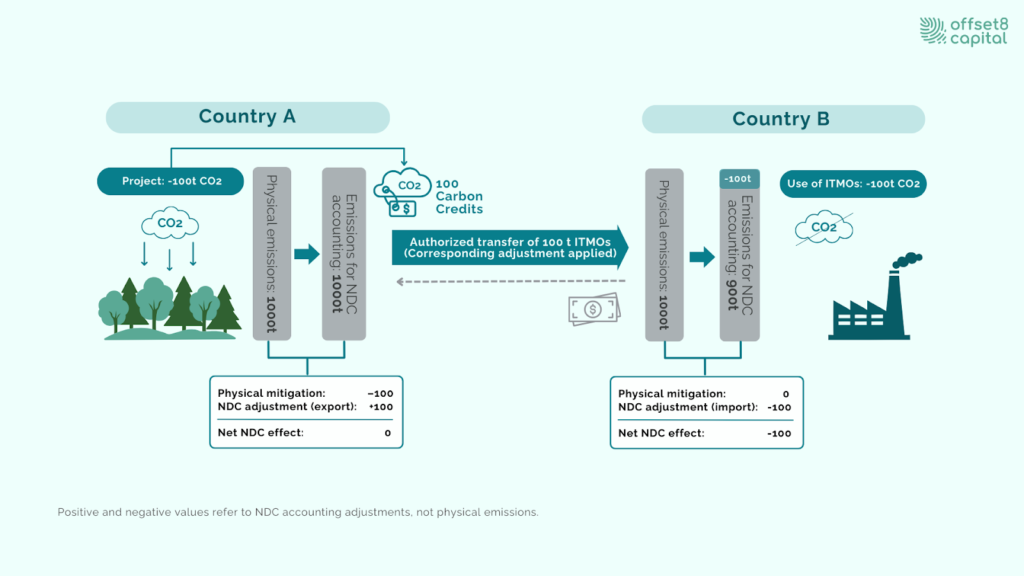
Fig3: How NDC Accounting Enables International Carbon Credit Transfers
NDCs function not only as national emission reduction policy frameworks but also as institutional foundations for carbon markets — shaping how mitigation outcomes are defined, transferred, and accounted for at the international level. National mitigation targets articulated in NDCs shape the supply–demand structure of emission reductions and the direction of policy incentives, thereby serving as macro-level policy signals that influence long-term carbon price formation and credit demand expectations.
Under the Paris Agreement, the institutional architecture for international carbon markets is being developed, with Article 6 establishing a framework for the international transfer and use of mitigation outcomes. Within this framework, NDCs constitute the fundamental accounting reference unit for national emission inventories and mitigation commitments. When international transfers or offset uses of credits occur, Corresponding Adjustments are required to prevent double counting, ensuring consistency with national emission accounts based on NDCs. Accordingly, NDCs can be positioned as the accounting and institutional backbone of international carbon credit markets.
At the domestic level, NDCs also function as long-term demand-side drivers of carbon market development. By committing to emission reduction targets, governments signal future increases in emission costs and regulatory stringency, prompting firms and financial institutions to consider mitigation investments and credit utilization strategies. NDCs thus act as policy-driven expectation formation mechanisms, indirectly shaping market behavior, credit demand forecasts, and price expectations.
Furthermore, NDCs are closely linked to credit quality assessment and eligibility criteria. Whether a credit contributes toward national mitigation targets or is treated as a purely voluntary offset depends on the scope of national NDCs and accounting rules. In some jurisdictions, governments define eligible credit types, caps on offset usage, and eligibility requirements for emissions trading systems (ETS), and in certain cases, credit use may be restricted or prohibited.
In this sense, NDCs are not merely national climate commitments; they constitute a foundational pillar underpinning the design, integrity, and credibility of carbon credit markets.

NDCs function not only as national emission reduction targets but also as policy signals that indicate the future trajectory of regulation, markets, and industrial structures. For companies and investors, NDCs should therefore be understood not as environmental policy statements, but as macro-strategic indicators for assessing medium- to long-term business risks and opportunities.
For companies, NDCs provide forward-looking signals of regulatory tightening and rising carbon costs. When governments commit to emission reduction targets, policies such as emissions reporting requirements, emissions performance standards, carbon taxes, and emissions trading systems (ETS) are more likely to be introduced or strengthened over time. Companies must therefore understand their emissions profiles (Scope 1, 2, and 3) and integrate decarbonization investments and carbon credit strategies into their long-term business planning. In particular, for energy-intensive industries, transport, construction, and materials sectors, the ambition level of NDCs can directly affect cost structures and competitive positioning.
For investors, NDCs are a critical macro variable for portfolio risk assessment. In jurisdictions with ambitious NDCs, rising carbon prices and regulatory tightening increase the risk of stranded fossil fuel-related assets, while expanding investment opportunities in renewable energy, electrification, hydrogen, CCUS, and other decarbonization technologies. NDC ambition thus serves as a key determinant of transition risk and growth opportunity across asset classes.
NDCs also influence corporate carbon credit strategies. The availability, usage caps, and eligibility criteria for credits vary across jurisdictions depending on national NDC frameworks and domestic regulations. Companies must therefore align their credit procurement strategies with regulatory environments. In particular, when utilizing international carbon markets under Article 6, it is essential to understand the role of Corresponding Adjustments and the consistency of credits with national emission accounting frameworks.
In this sense, NDCs are not merely national climate pledges; they constitute a policy meta-framework that shapes regulatory environments, technology investment pathways, capital markets, and carbon markets in an integrated manner. Companies and investors should treat NDCs not as background environmental information, but as foundational assumptions for business strategy and capital allocation decisions.
Disclaimer
This commentary is for informational purposes only and should not be considered financial, investment, or regulatory advice. Offset8 Capital Limited is regulated by the ADGM FSRA (FSP No. 220178). No assurances or guarantees are made regarding its accuracy or completeness. Views expressed are our own and subject to change
NDCs serve as the fundamental accounting reference for national emission targets and underpin the transfer of mitigation outcomes and Corresponding Adjustments under Article 6 of the Paris Agreement. As such, NDCs constitute the institutional and accounting foundation of carbon credit markets.
Each country’s NDC is publicly available on the official website of the UNFCCC Secretariat, which maintains a centralized registry of submitted NDC documents.
No. NDCs define national emission reduction targets, whereas Article 6 establishes the rules for international transfers of mitigation outcomes and carbon market mechanisms. While they are closely linked, they are distinct institutional components of the Paris Agreement.

