
The space industry serves a dual role in the fight against climate change: it functions as critical observation infrastructure, while at the same time being an emissions source that generates environmental burden in its own right. This duality is emerging as a policy focal point in 2025–2026.
Satellite observation data is increasingly used as foundational technology underpinning the credibility of carbon credit markets — monitoring deforestation, identifying methane emission sources, and verifying corporate emissions disclosures.
At the same time, rocket launches and satellite atmospheric reentry are human activities that affect the entire atmosphere, including the stratosphere, and are a source of emissions such as greenhouse gases and black carbon.
This article explains space debris and atmospheric emissions, the current state of policy, atmospheric impacts, and the EU's policy frameworks — the EU Space Act and PEFCR4Space.
When discussing space sustainability, debris (space junk) and atmospheric emissions are often conflated. However, the two differ significantly both in the nature of the problem and in the current state of regulation. The dominant concern in this field is the accumulation of debris, while the atmospheric impact (increased carbon emissions) is recognized as a newly emerging issue.
| Debris (Space Junk) | Atmospheric Emissions (BC, NOx, CO2, etc.) | |
| Entity | Physical objects such as satellites, rocket upper stages, and fragments | Chemical substances and particles generated by combustion |
| Nature of the problem | Collision risk in orbit | Impact on atmospheric composition, climate, and the ozone layer |
| Current regulation | Multiple frameworks already in operation, including the FCC's 5-year deorbit rule, IADC guidelines, and debris provisions in the EU Space Act | The EU Space Act's environmental footprint disclosure obligation is only now in the process of being legislated |
This shows that while space debris pollution has attracted considerable attention, regulation of emissions remains comparatively underdeveloped.
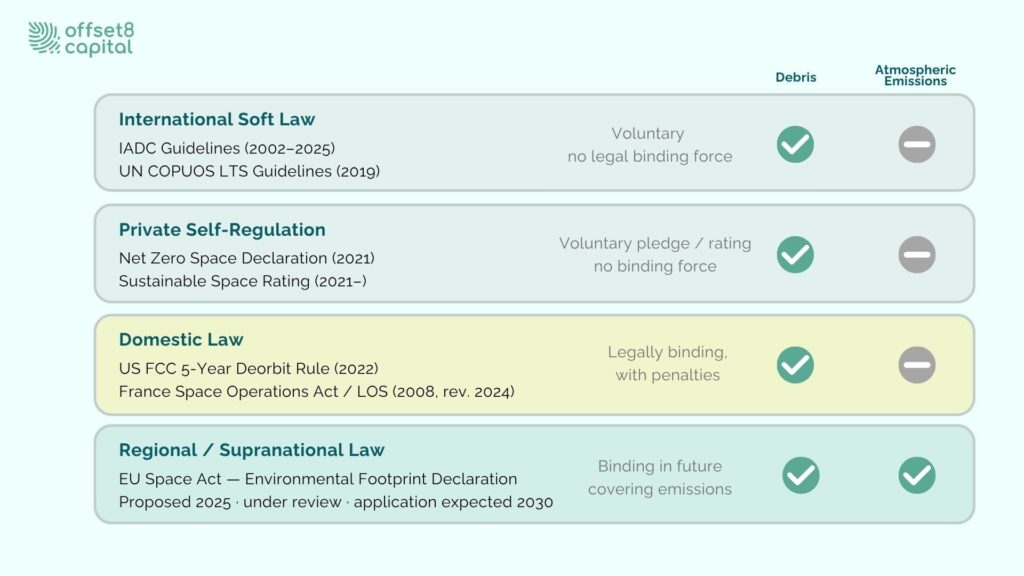
Fig1: Environmental Policy in the Space Sector
The Outer Space Treaty (1967) and its related conventions — the foundational treaties governing space activity — did not anticipate the current environment of more than 300 launches per year. Neither treaty contains specific numerical standards regarding emissions or debris.
The current governance structure consists of four layers with varying degrees of binding force:
| Layer | Body / Framework | Start Date | Binding Force |
| International soft law | IADC (Inter-Agency Space Debris Coordination Committee) Guidelines | Established 2002 (revised 2007, 2020, 2021, 2025) | None (voluntary; framed with "encouraged" language) |
| International soft law | UN COPUOS Long-term Sustainability Guidelines | Agreed in 2018, formally adopted 2019 (A/74/20) | None (voluntary; explicitly stated as "voluntary and not legally binding") |
| Private self-regulation | Net Zero Space Declaration (Paris Peace Forum) | November 2021 | None (voluntary pledge) |
| Private self-regulation | Sustainable Space Rating | Proposed 2016, operational since 2021 | None (rating system) |
| Domestic law | US FCC 5-Year Deorbit Rule | Adopted and effective September 29, 2022 (existing operators granted a grace period until September 29, 2024) | Yes |
| Domestic law | France: Space Operations Act (LOS) + technical regulations imposing debris mitigation obligations | Enacted June 2008, effective December 2010 (specified in March 2011 technical regulations; substantially revised June 2024) | Yes (fines of €200,000 for violations, increased to 3 years' imprisonment plus €300,000 for defense-related violations; mega-constellations subject to deorbit obligations of 2–5 years depending on satellite count) |
| Regional/supranational law | EU Space Act (environmental footprint disclosure obligation) | Proposed June 2025, under deliberation (enactment timing undetermined) | To be binding in the future (expected application from January 1, 2030) |
The top four layers all address the debris problem. Of these, only the EU Space Act addresses atmospheric emissions.
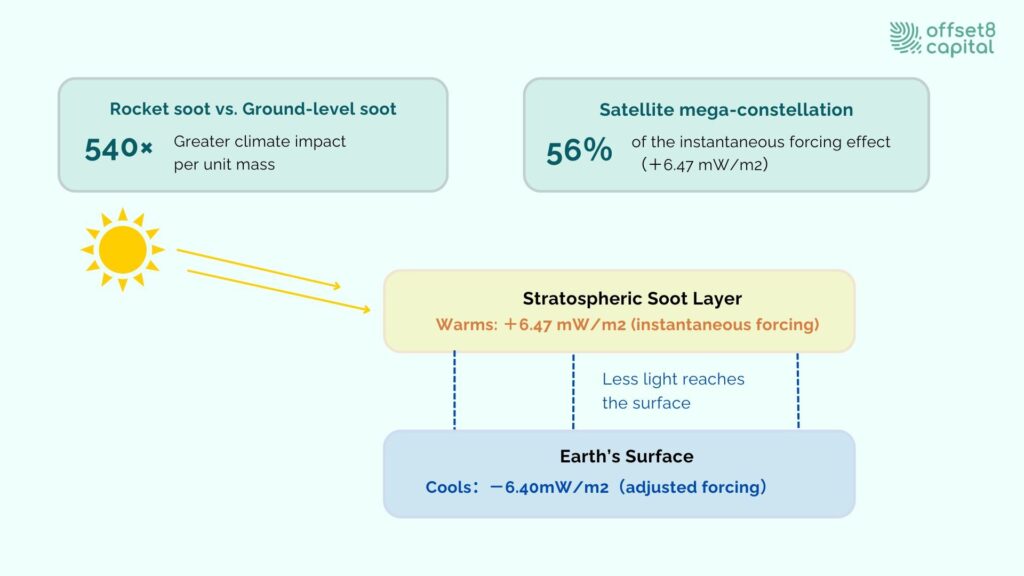
Fig2: The climate-cooling effect of rocket soot
Among rocket emissions, black carbon (soot) is a frequently discussed topic. In May 2026, a research team at University College London (UCL) published a paper in Earth's Future that quantified the effects of this substance.
When kerosene-fueled rockets combust, they produce soot — fine particles of black carbon. Soot released near the ground is washed away by rain within a few weeks, but rocket-generated soot is released directly into the stratosphere and mesosphere at high altitude, where it remains in the atmosphere for years. According to the paper, soot of rocket origin has 540 times greater climate impact than an equal mass of soot originating at ground level.
Soot absorbs sunlight, producing two opposing effects:
One way to picture this: it is as if the Earth were wearing sunglasses. The soot layer (the lens of the sunglasses) itself absorbs sunlight and heats up, but the amount of light reaching the surface is reduced, making the surface slightly darker and cooler. The rapid growth in launches of satellite mega-constellations (very large groups of satellites working together toward a common purpose) accounts for more than half of this effect (56% of the instantaneous forcing).
Projections for the year 2029 indicate that the primary chemical loss of stratospheric ozone from all missions combined amounts to only 0.018%. Compared with the loss attributable to substances controlled under the Montreal Protocol (approximately 2%), this is roughly one-hundredth the scale. However, the paper cautions that when secondary atmospheric-dynamical effects are included, this figure could rise to as much as 0.18%, and the contribution of mega-constellations could expand from 9% to as much as 33%.
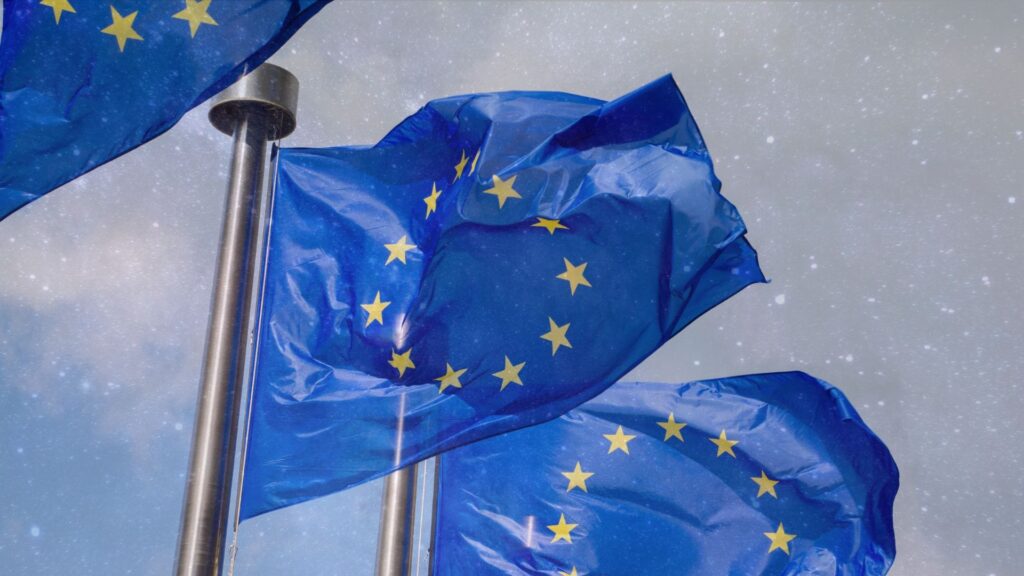
The EU's space environmental policy is broadly composed of two initiatives: the EU Space Act and PEFCR4Space. The former is a regulation that establishes legal obligations, while the latter is the technical yardstick for actually implementing those obligations. Let's look at the characteristics of each.
On June 25, 2025, the European Commission submitted the draft EU Space Act regulation. Its official title is the Proposal for a Regulation of the European Parliament and of the Council on the safety, resilience and sustainability of space activities in the Union, and it is a binding Regulation based on Article 114 TFEU (internal market) as its legal basis.
According to the European Commission, currently, 13 member states each have their own space-related laws, and the resulting regulatory fragmentation is seen as impeding the functioning of the internal market. Against this backdrop, the Act aims to harmonize licensing requirements across the EU around three pillars: safety, cyber-resilience, and environmental sustainability.
On the environmental front, Title IV, Chapter III (Articles 96–100) is relevant. Space operators (with small enterprises and research/educational institutions exempted until the end of 2031) are obligated to calculate an Environmental Footprint (EF) across the entire lifecycle of a space mission — design, manufacturing, operation, and disposal phases — and must submit an Environmental Footprint Declaration (EFD), together with a verification certificate from a qualified technical body, as part of the licensing application. The datasets used in the calculations are to be submitted to the European Commission's EF-related database, with aggregated data made public.
However, the calculation methodology itself (the specific formulas and standards) is not written into the text of the draft regulation; it is designed to be defined separately by the European Commission through an implementing act (Article 97(4)).
At present, the proposal is under deliberation through the ordinary legislative procedure between the European Parliament and the Council, and the timing of its enactment remains undetermined. The application date envisioned in the draft regulation is January 1, 2030.
PEFCR4Space is a project to develop Product Environmental Footprint Category Rules (PEFCR) for the space sector. Commissioned by the European Commission (DG DEFIS), it is being carried out by an external consortium led by VITO (including PRé Sustainability, Ecomatters, Ecoinnovazione, Glasgow Caledonian University, NovaSpace, and others).
The project is based on the PEF (Product Environmental Footprint) / OEF (Organisation Environmental Footprint) methodology set out in European Commission Recommendation 2021/2279. This is an EU-recommended Life Cycle Assessment (LCA) methodology — a framework for measuring environmental performance in a standardized way across the entire lifecycle, from raw material sourcing through manufacturing, distribution, use, and disposal.
The project timeline is as follows:
The technical secretariat comprises 28 organizations (representing more than 56% of the European market share across launch, manufacturing, and operations), and the European Space Agency (ESA) is actively involved throughout the development process. Efforts are also being made to harmonize with ESA's own ESA LCA Handbook and ESA LCA Database, with the two sides cooperating on measures such as standardizing data collection templates.
The first draft (published in October 2025) covers the following six service categories:
That said, for some categories at this stage, market-average modeling remains only partially developed due to insufficient data.
The space industry has a dual character: it supports climate observation, while its launches and reentries emit greenhouse gases and soot. Multiple frameworks — including the FCC's rule and the EU Space Act — are already in operation to regulate debris, but the only legal framework addressing atmospheric emissions is the environmental footprint provision of the EU Space Act, and no binding international treaty exists on this front.
Scientifically, it has been found that soot of rocket origin has 540 times the climate impact of soot originating at ground level, with satellite mega-constellations accounting for more than half of this effect. While the current impact on the ozone layer is small, uncertainty remains.
Disclaimer
*Disclaimer: This commentary is for informational purposes only and should not be considered financial, investment, or regulatory advice. No assurances or guarantees are made regarding its accuracy or completeness. Views expressed are our own and subject to change
Not at present. The Outer Space Treaty (1967), the foundational treaty governing space activities, did not anticipate today's frequency of launches, and it contains no specific numerical standards on emissions or debris. International-level efforts (the IADC guidelines and the UN COPUOS guidelines) remain voluntary in nature and carry no legal binding force.
The application date envisioned in the draft regulation is January 1, 2030. However, having only been proposed in June 2025, it remains under deliberation through the ordinary legislative procedure between the European Parliament and the Council, and the formal timing of enactment is undetermined. Small enterprises and research/educational institutions will be exempted from environment-related obligations until the end of 2031.
The project launched in October 2024, and a public consultation on the first draft took place in October–November 2025. Development of EF-compliant datasets is set to intensify in 2026, and the final version is expected to be published in 2027 following consultation on a second draft.

