
In recent years, the carbon credit market has increasingly recognized the importance of carbon removals, alongside traditional avoidance (emission reduction) credits, in policy and corporate strategy. This shift reflects the widely accepted international understanding that even with maximum emission reductions, residual emissions that cannot be eliminated for technical or economic reasons will remain on the path to net zero.
Against this backdrop, nature based solutions that use forests and vegetation are positioned as an important option alongside engineered removal technologies. One of the key methodologies in this space is VM0047 (Afforestation, Reforestation, and Revegetation, ARR), developed by Verra.
This article organizes VM0047’s core concepts, the scope of eligible projects, the design philosophy and differences between its two quantification approaches, the position of the latest version v1.1, and practical points that practitioners should pay particular attention to, together with the broader institutional context.
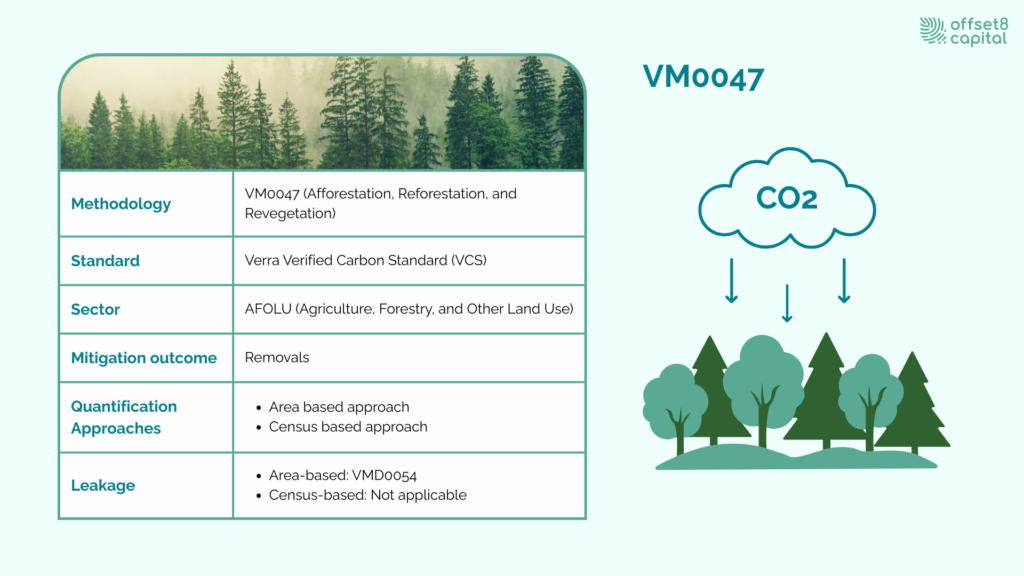
Fig1: VM0047 | How Afforestation, Reforestation, and Revegetation Generate Carbon Removal Credits
VM0047 is a carbon credit methodology for ARR projects that absorb and store atmospheric CO₂ through afforestation, reforestation, and revegetation. It operates under Verra’s Verified Carbon Standard (VCS) program and falls within the AFOLU (Agriculture, Forestry, and Other Land Use) sector.
A key feature of VM0047 is that credits issued under this methodology are explicitly classified as Removals as a mitigation outcome. In other words, VM0047 quantifies not the avoidance of emissions, but the act of removing CO₂ from the atmosphere and storing it as carbon stocks.
In ARR credits, the primary carbon storage pool is woody biomass, both aboveground and belowground. Because carbon accumulates through tree growth and vegetation recovery, the methodology is characterized by the potential for medium and long term carbon storage.
By contrast, soil organic carbon (SOC) is not mandatory in all cases under VM0047. Under the area based approach, SOC must be included only when specific conditions defined by the methodology are met, such as when project activities cause soil disturbance. In this sense, SOC is treated as a supplementary carbon pool within the overall framework.
Due to this design, ARR credits under VM0047 are often used less as a short term mitigation measure and more as a tool to support medium and long term climate strategies and net zero pathways. In recent years, VM0047 has also gained attention in both policy and practice, including its relationship with ICVCM CCP approval and broader international carbon market design discussions.

Eligible Land and Activities
VM0047 covers a wide range of ARR activities, including:
While the methodology text does not necessarily list terms such as urban forestry or agroforestry verbatim, it clearly provides a pathway, through the census based approach, to include ARR activities that occur outside forests and do not involve land use change.
Importantly, VM0047 is not limited to large, single site forest projects. If the methodology requirements are met, small scale and dispersed planting activities can also be eligible.
At the same time, broad applicability does not mean relaxed requirements. Applicability conditions, exclusions, additionality, leakage, and MRV requirements are defined in detail and applied strictly. VM0047 is designed to incorporate diverse ARR activities while protecting environmental integrity through conditional eligibility and robust safeguards.
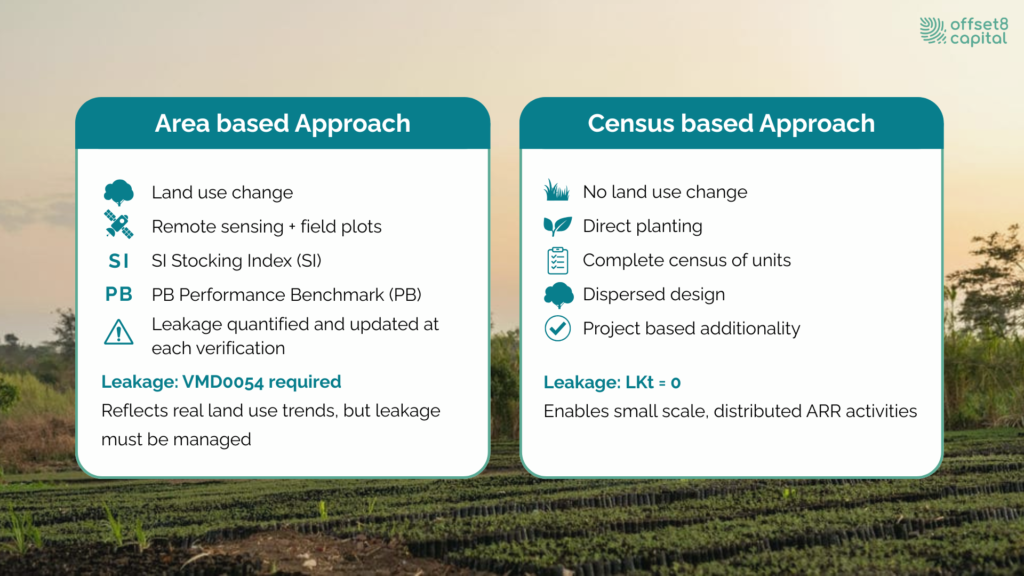
Fig 2: VM0047 Quantification Approaches — Area-based vs. Census-based
VM0047 provides two distinct quantification approaches depending on the nature of the project and the land use context. In the explanation below, land use change refers to a change in the main production or management activity previously occurring on the land, such as agriculture or grazing, as a result of project implementation.
The area-based approach applies to ARR projects that involve land cover change, such as converting non forest land to forest or enhancing carbon stocks in existing forests.
Key elements include:
Because the baseline is updated using ex post observations, this approach can reflect actual land use trends and wider regional dynamics. However, since it involves land use conversion, leakage management is mandatory.
The census-based approach applies to ARR activities that do not occur in forests and do not result in land use change. Eligible projects must meet conditions such as:
Under this approach, additionality is demonstrated using a project method, and the crediting baseline is set accordingly. Because maintaining existing land use is a condition of eligibility, leakage is treated as LKt = 0 within the framework.
This approach is designed to bring ARR activities into the system that are difficult to quantify under the area based approach, enabling coverage of small scale, distributed projects that do not create forests.
For ARR projects using the area based approach, applying VMD0054 (Module for Estimating Leakage from ARR Activities) is mandatory.
This module is designed to quantify and deduct the risk that, due to the ARR project, agricultural activities or land uses that occurred on the project land prior to implementation may shift to other areas, indirectly increasing greenhouse gas emissions, which is referred to as leakage.
VMD0054 categorizes leakage primarily into two types.
VMD0054 does not allow each project to freely design its own leakage method. Instead, it provides a standardized approach to improve consistency and comparability across projects.
In practice, the methodology requires the following stepwise process:
This enables systematic checks to ensure that apparent carbon gains within the project area are not offset by increased emissions elsewhere.
Because the census based approach requires that existing land use is not changed, activity shifting leakage is treated as not occurring under the framework, and VMD0054 is not required.
In contrast, for land use conversion under the area based approach, leakage risks cannot be ignored, and applying VMD0054 is treated as a prerequisite for ensuring environmental integrity.
VM0047 v1.1 became effective on May 14, 2025. While maintaining the basic structure of v1.0, it reorganizes and clarifies applicability conditions and calculation rule wording to reduce interpretive variability in practice.
Verra also set transition grace periods to account for projects already designed under VM0047 v1.0 assumptions.
Transition Deadlines
In addition, projects using legacy ARR methodologies (AR-ACM0003 or AR-AMS0007) are required to complete validation by June 30, 2025.
VM0047 is often regarded as a strong candidate for high quality credits because it:
Furthermore, VM0047 v1.0 and v1.1 have been approved by the ICVCM as meeting the Core Carbon Principles (CCPs) requirements, strengthening the methodology’s international credibility.
VM0047 is a core Verra methodology for quantifying carbon removals through ARR activities. By evaluating real CO₂ absorption and storage, rather than avoiding emissions, it plays an increasingly important role in net zero strategies where residual emissions remain unavoidable.
The methodology offers two approaches. These are an area-based approach for projects involving land use conversion, with mandatory leakage accounting through VMD0054, and a census-based approach for distributed planting activities that maintain existing land use, where leakage is treated as LKt = 0.
With VM0047 v1.1 effective from May 2025 and the methodology’s alignment with ICVCM CCP requirements, VM0047 continues to serve as a key institutional foundation for positioning ARR credits as high quality carbon removal credits.
Disclaimer
*Disclaimer: This commentary is for informational purposes only and should not be considered financial, investment, or regulatory advice. No assurances or guarantees are made regarding its accuracy or completeness. Views expressed are our own and subject to change
VM0047 is Verra’s carbon credit methodology for ARR projects that remove CO₂ from the atmosphere through afforestation, reforestation, and revegetation. It quantifies carbon removals, not avoided emissions.
It covers a wide range of ARR activities, including converting non forest land to forest and increasing stocks in existing forests. If requirements are met, small scale and dispersed plantings can also be included.
The area-based approach applies to projects involving land use change and uses remote sensing and field sampling to quantify removals. The census-based approach applies to dispersed plantings that maintain existing land use and relies on a complete census of planting units.

